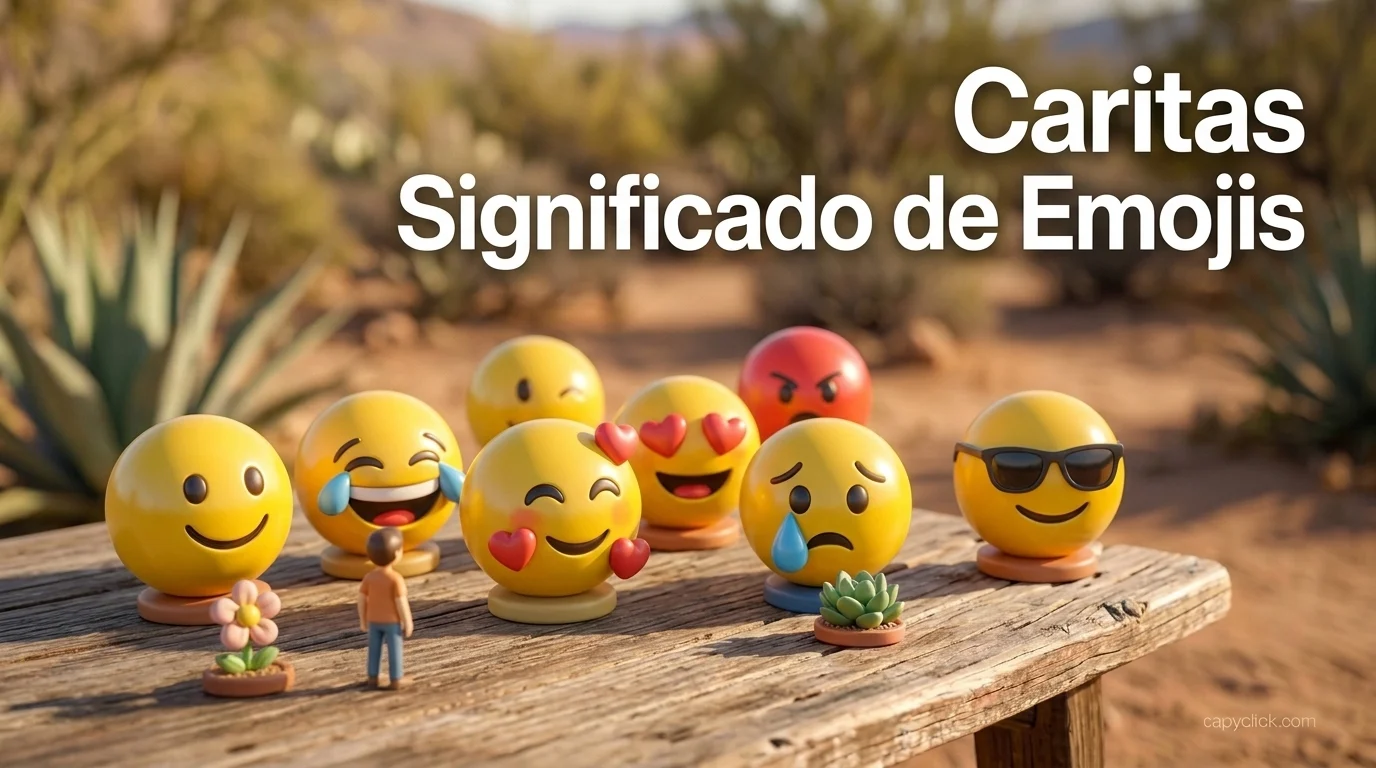
Have you ever received a message filled with face emojis and wondered what each expression really means? Understanding caritas significado de emojis helps you learn how different emoji faces express happiness, sadness, love, surprise, anger, and many other feelings. The Spanish phrase means “meanings of little faces in emojis,” and it is commonly associated with learning what facial emojis represent in digital conversations.
Face emojis make messages feel more personal because they add emotion to words. A smiling face can show happiness, a crying face can express sadness or overwhelming joy, and a heart-eyes face can communicate love or admiration. However, the meaning of an emoji can change depending on the conversation, the person using it, and the cultural context.
In this guide, you will discover the meanings of popular face emojis, examples of how to use them, and tips for understanding their meanings in everyday messages.
Quick Answer: What Does Caritas Significado de Emojis Mean?
Caritas significado de emojis refers to the meanings of face emojis, especially the small facial expressions people use in text messages, social media posts, and online conversations.
Here are some common face emojis and their meanings:
| Emoji | Common meaning |
| 😀 | Happiness and friendliness |
| 😂 | Laughing hard or finding something hilarious |
| 🥹 | Feeling touched, emotional, or grateful |
| 🥰 | Love, affection, or warmth |
| 😍 | Love, admiration, or excitement |
| 😢 | Sadness or disappointment |
| 😭 | Intense sadness or uncontrollable laughter |
| 😡 | Anger or frustration |
| 😱 | Shock, fear, or surprise |
| 😉 | Playfulness or a subtle hint |
| 🤔 | Thinking or questioning something |
| 😎 | Confidence or a cool attitude |
These meanings are common interpretations rather than fixed rules. The surrounding words and the relationship between the people communicating help determine what an emoji means.
What Are Caritas Emojis?
The word caritas is often used online as a spelling of the Spanish word caritas, meaning little faces. In the context of emojis, it usually refers to small digital faces that display emotions, reactions, or moods.
The official English term is generally face emojis or smiley emojis.
People use these emojis on platforms such as WhatsApp, Instagram, TikTok, Facebook, and Snapchat. They help communicate feelings that might otherwise be difficult to express through plain text.
For example:
- “I passed my exam 😀” shows happiness.
- “I miss you 🥹” adds a tender, emotional feeling.
- “That joke was hilarious 😂” expresses strong amusement.
- “Are you serious? 🤔” suggests doubt or curiosity.
Face emojis are useful because they can make a short message easier to understand. However, they can also create confusion when two people interpret the same expression differently.
Different Types of Face Emojis and Their Meanings
There are many face emojis, and each group can communicate different emotions. Learning these categories makes it easier to choose the right expression for your messages.
1. Happy Face Emojis

😀 Grinning Face
This emoji represents happiness, friendliness, excitement, or a positive mood. It works well when sharing good news or responding warmly to someone.
Example: “I finally finished my project 😀”

😊 Smiling Face with Smiling Eyes
This expression often communicates kindness, appreciation, comfort, or gentle happiness. It can make a friendly message sound warmer.
Example: “Thank you for helping me 😊”

😂 Face with Tears of Joy
This emoji shows intense laughter. People use it when a joke, video, or situation is extremely funny.
Example: “I cannot stop laughing at that video 😂”
2. Love and Affection Emojis

🥰 Smiling Face with Hearts
This face communicates affection, warmth, appreciation, or feeling loved. It can be used with a partner, friend, family member, or someone who has done something kind.
Example: “You always make my day better 🥰”

😍 Smiling Face with Heart-Eyes
This emoji often expresses love, attraction, admiration, or excitement about something wonderful. It can describe a person, a meal, an outfit, or a beautiful place.
Example: “Your new dress looks amazing 😍”

😘 Face Blowing a Kiss
This emoji represents a kiss, affection, or playful romantic interest. Its meaning depends on the relationship and the tone of the conversation.
Example: “Good night, talk to you tomorrow 😘”
3. Sad and Emotional Face Emojis

😢 Crying Face
This emoji usually expresses sadness, disappointment, sympathy, or emotional pain. It is suitable for serious or mildly upsetting situations.
Example: “I will miss you when you move away 😢”

😭 Loudly Crying Face
This emoji can represent intense sadness, heartbreak, overwhelming emotion, or even uncontrollable laughter in humorous online conversations.
Example: “That ending was so emotional 😭”

🥹 Face Holding Back Tears
This face often expresses gratitude, being deeply touched, pride, or trying not to cry. It is popular for emotional or heartfelt moments.
Example: “You remembered my birthday 🥹”
4. Funny and Playful Face Emojis

😉 Winking Face
A wink can suggest teasing, joking, flirting, or sharing a playful hint. It can also make a message feel less serious.
Example: “I might have a surprise for you 😉”

😝 Squinting Face with Tongue
This emoji conveys silliness, joking, or playful mischief. It is commonly used among friends during lighthearted conversations.
Example: “You lost the game again 😝”

🙃 Upside-Down Face
This face may indicate irony, silliness, awkwardness, or a joking response to an uncomfortable situation.
Example: “I studied all night and forgot the exam was tomorrow 🙃”
5. Surprised and Confused Face Emojis

😲 Astonished Face
This expression communicates surprise, amazement, or disbelief. Use it when something unexpected happens.
Example: “You won the competition? 😲”

🤔 Thinking Face
This emoji expresses thought, curiosity, uncertainty, or doubt. It can show that you are considering an idea before answering.
Example: “I am not sure that is the best option 🤔”

🤨 Face with Raised Eyebrow
This emoji often signals suspicion, skepticism, or questioning someone’s statement. Depending on the conversation, it may seem curious or disapproving.
Example: “You finished the entire assignment in five minutes? 🤨”
What Do Angry and Negative Face Emojis Mean?
Not every face emoji communicates a positive emotion. Some are used to show irritation, frustration, exhaustion, or discomfort.
| Emoji | Meaning | Example |
| 😡 | Strong anger | “I cannot believe that happened 😡” |
| 😤 | Frustration or determination | “I will keep trying 😤” |
| 😒 | Annoyance or dissatisfaction | “That was not funny 😒” |
| 🙄 | Disbelief or exasperation | “Here we go again 🙄” |
| 😩 | Exhaustion or frustration | “This week has been exhausting 😩” |
| 😬 | Awkwardness or nervousness | “I accidentally sent the wrong message 😬” |
| 😔 | Sadness or disappointment | “I hoped things would go differently 😔” |
These expressions can make messages clearer, but they can also make a conversation feel more negative. When discussing a sensitive subject, choose an emoji carefully or explain your feelings in words.
What Is the Difference Between Similar Face Emojis?
Some face emojis look alike but communicate different feelings. Understanding these small differences helps you choose the most suitable expression.
😂 vs. 😭
Both emojis can appear in funny conversations, but they have different common uses.
- 😂 usually means something is very funny.
- 😭 traditionally represents intense crying, but online it can also mean laughing so hard that you are overwhelmed.
Example:
“Your joke made me laugh 😂”
“I am crying at how funny this is 😭”
In the second example, the crying emoji is used humorously rather than to express sadness.
😀 vs. 😊
Both faces communicate happiness, but their tone differs slightly.
- 😀 often expresses open, energetic happiness.
- 😊 usually feels softer, warmer, and more gentle.
Example:
“I got the job! 😀”
“Thank you for being so kind 😊”
🥰 vs. 😍
These two emojis are both associated with love, but they are not always interchangeable.
- 🥰 often communicates affection, tenderness, or feeling appreciated.
- 😍 usually expresses admiration, attraction, or excitement about something appealing.
Example:
“You always take care of me 🥰”
“That view is incredible 😍”
🙃 vs. 😉
These expressions can both appear playful, but their meanings differ.
- 🙃 often suggests irony, awkwardness, or a silly situation.
- 😉 usually suggests a wink, a joke, a hint, or possible flirtation.
Example:
“I forgot my own password again 🙃”
“I have something exciting to tell you later 😉”
How Do People Use Face Emojis on Social Media?
Face emojis appear in messages, comments, captions, reactions, and video descriptions. People use them to express emotions quickly and make digital communication more engaging.
On WhatsApp and in Text Messages
In private messages, face emojis help communicate the mood behind your words.
Examples:
- “Good morning 😊”
- “I am proud of you 🥹”
- “That sounds amazing 😍”
- “Are you joking? 😂”
- “I am waiting for your reply 🙄”
The right emoji can make a short message feel more natural. Still, adding too many emojis can make a message harder to read.
On Instagram and TikTok
On social platforms, emojis often support reactions, jokes, and emotional captions.
Examples:
- Vacation photo: “Living my best life 😎”
- Funny video: “I was not ready for that 😂”
- Romantic picture: “My favorite person 🥰”
- Beautiful sunset: “This view is everything 😍”
- Unexpected moment: “What just happened? 😱”
People may also use emojis in a humorous or exaggerated way. A crying face, for example, might describe a minor inconvenience rather than genuine sadness.
In Comments and Online Communities
Emojis help people react to content without writing long responses.
For instance, 🤔 may indicate that someone is questioning a claim, while 🥹 may show that a story touched them emotionally.
However, a single emoji rarely tells you everything about someone’s opinion. Read the full comment and consider the context before interpreting the reaction.
How to Choose the Right Face Emoji
Choosing an emoji becomes easier when you think about the message you want to communicate.
😊
For friendly messages
Choose 😊 or 😀 to communicate warmth, happiness, or a positive attitude.
🥰
For affection
Use 🥰 or 😘 when you want to express care, love, or closeness.
😂
For humor
Use 😂 or 😝 when a message is funny or intentionally playful.
🤔
For questions or uncertainty
Choose 🤔 when you are thinking, considering an idea, or unsure about something.
😢
For sadness or sympathy
Use 😢 or 😔 when expressing disappointment, sadness, or concern.
Before sending an emoji, consider these three questions:
- Does it match the emotion I want to express?
- Could the other person misunderstand it?
- Is it appropriate for this conversation?
For professional messages, a simple smile may be enough. For close friends, more playful expressions may feel natural.
Common Mistakes When Understanding Face Emojis
Even familiar emojis can be misunderstood. Here are some mistakes to avoid.
Assuming Every Emoji Has Only One Meaning
The same emoji can express different emotions in different situations. For example, 😭 may represent sadness in one message and uncontrollable laughter in another.
Better approach: Read the surrounding words before deciding what the sender means.
Confusing Playfulness with Anger
Expressions such as 🙄 and 😒 can be used jokingly between close friends. In a serious discussion, however, they may seem rude or dismissive.
Better approach: Consider your relationship with the sender and the tone of the conversation.
Treating a Heart-Eyes Emoji as a Romantic Confession
😍 can express romantic attraction, but it can also show admiration for food, clothing, pets, artwork, or a beautiful place.
Better approach: Do not assume romantic interest from one emoji alone.
Using Too Many Emojis in One Message
A long string of faces can make a message difficult to understand, especially when the expressions seem unrelated.
Better approach: Choose one or two emojis that support your message instead of replacing every word with a symbol.
Ignoring Differences Between Platforms
Emoji artwork can vary slightly between Apple, Google, Microsoft, and other platforms. A face may look more playful, serious, or expressive depending on the device.
Better approach: Focus on the emoji’s general meaning rather than relying on every small visual detail.
Practical Tips for Learning Emoji Meanings in 2026
Emoji use continues to evolve as people develop new ways to communicate online. Some meanings remain familiar, while others become popular through social media trends and online communities.
Here are practical ways to understand face emojis more accurately:
- Learn the common expressions first. Start with smiling, laughing, crying, love, anger, and thinking faces.
- Study examples in real conversations. Seeing how an emoji appears in a sentence can help you understand its intended meaning.
- Notice the surrounding words. A message’s wording often explains whether an expression is serious, playful, or sarcastic.
- Understand internet slang. Some communities use traditional crying or skull emojis to communicate laughter and disbelief.
- Avoid assumptions. An emoji alone cannot reliably reveal someone’s exact feelings or intentions.
- Use emojis naturally. Choose expressions that match your personality and the tone of your message.
You can also consult the Unicode Consortium’s emoji resources to learn about standardized emoji names and descriptions. These resources help explain what a character represents, although everyday users may give it additional meanings.
Frequently Asked Questions About Caritas Significado de Emojis
1. What does caritas significado de emojis mean in English?
It means “meanings of little faces in emojis” in Spanish. The phrase generally refers to understanding facial emojis and the emotions they express in digital conversations.
2. What are the most popular face emojis?
Popular face emojis include 😀, 😂, 🥰, 😍, 😭, 😊, 😉, and 🤔. People commonly use them to communicate happiness, laughter, affection, sadness, playfulness, and curiosity.
3. What does 🥹 mean in a text message?
The 🥹 emoji usually expresses being touched, emotional, grateful, proud, or close to tears. Its exact meaning depends on the message and situation.
4. What is the difference between 😂 and 😭?
The 😂 emoji usually represents laughter or amusement. The 😭 emoji traditionally expresses intense sadness but is also widely used online to show overwhelming laughter or emotion.
5. Can face emojis have different meanings?
Yes. An emoji’s meaning can change depending on context, culture, personal habits, and online trends. The same face may express different feelings in different conversations.
6. Which face emoji represents love?
The 🥰, 😍, and 😘 emojis commonly communicate affection, admiration, or romantic interest. However, they can also be used with friends and family or to express appreciation for something enjoyable.
7. Where can I use face emojis?
You can use face emojis in text messages, WhatsApp chats, Instagram captions, TikTok comments, Facebook posts, and many other digital conversations. Choose expressions that suit your audience and the situation.
8. How can I learn new emoji meanings?
You can learn through examples, conversations, emoji reference resources, and observing how people use expressions online. Remember that trending meanings may differ from the original description of an emoji.
Conclusion
Understanding caritas significado de emojis makes digital conversations easier because face emojis help express emotions that words alone may not fully communicate. From happy faces and heart-eyes expressions to crying, angry, and thinking faces, each emoji offers a simple way to add feeling and personality to a message. Learning their common meanings helps you communicate more clearly on messaging apps and social media.
Remember that emojis do not always have one fixed meaning. Their interpretation depends on the context, the relationship between the people communicating, and current online habits. Use face emojis naturally, pay attention to the words around them, and avoid making assumptions based on a single expression. With a little practice, you can understand and use face emojis more confidently in everyday conversations.

I’m Blake Thomas, a passionate caption writer at CapyClick. I love creating creative, catchy, funny, and meaningful captions that help people express themselves and make every social media post stand out.