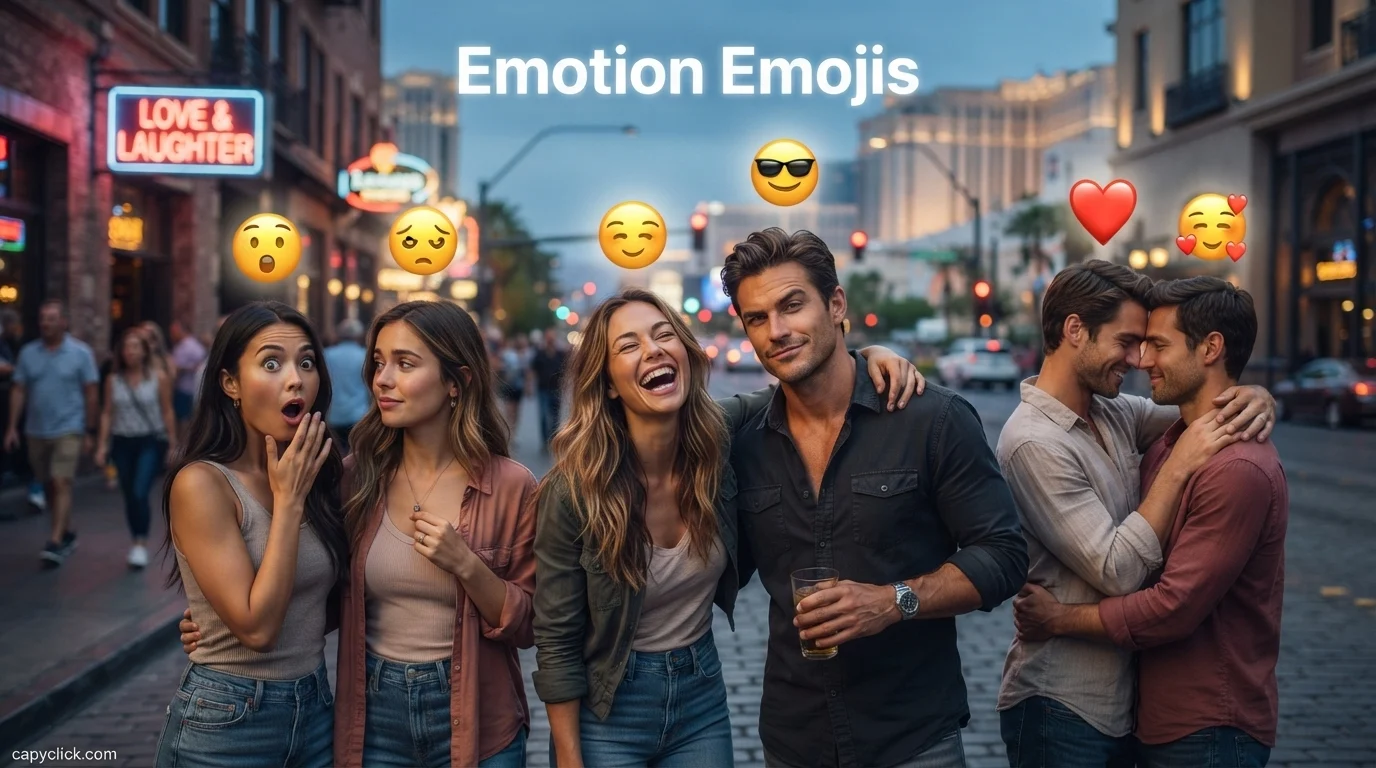
Emojis make it easier to express feelings when words alone do not feel enough. Emotion emojis can show happiness, sadness, love, excitement, anger, confusion, fear, surprise, embarrassment, and many other emotions in just one symbol. if you are texting a friend, posting on Instagram, replying to a comment, or sharing a personal moment, choosing the right emoji can make your message feel clearer and more natural.
Quick Answer: What Are Emotion Emojis?
Emotion emojis are symbols used to communicate feelings, moods, and emotional reactions in digital conversations. Popular examples include 😊 for happiness, 😢 for sadness, 😡 for anger, 😍 for affection or admiration, 😱 for shock or fear, and 😂 for strong amusement.
They are useful because they add emotional context to short messages and can make online communication feel more expressive and personal.
| Emotion | Common Emoji | Typical Meaning |
|---|---|---|
| Happiness | 😊 | Feeling happy or pleased |
| Love | ❤️ | Love, care, affection |
| Laughter | 😂 | Finding something very funny |
| Sadness | 😢 | Feeling sad or emotional |
| Anger | 😡 | Anger or frustration |
| Surprise | 😮 | Shock or amazement |
| Fear | 😨 | Fear, worry, or nervousness |
| Confusion | 😕 | Uncertainty or confusion |
| Embarrassment | 😳 | Feeling shy or embarrassed |
| Excitement | 🤩 | Strong excitement or admiration |
| Relief | 😌 | Calmness or relief |
| Thinking | 🤔 | Thinking or questioning |
Why Do People Use Emotion Emojis?
Digital messages do not include facial expressions, gestures, or tone of voice. A short sentence can therefore be interpreted in several ways.
For example:
“Okay.”
Depending on the situation, this could sound calm, annoyed, disappointed, or completely neutral.
Adding an emoji can change the emotional meaning:
- Okay 😊 — friendly and positive
- Okay 😕 — uncertain
- Okay 😡 — angry
- Okay 😌 — calm or relieved
- Okay 😂 — playful or joking
This makes emojis especially useful in texting and social media conversations.
What Are the Main Types of Emotion Emojis?
There are hundreds of emojis that can communicate emotions directly or indirectly. They can be grouped into several useful categories.
Happy Emotion Emojis
Happy emojis are among the most commonly used.
Examples include:
- 😀 — broad happiness
- 😃 — cheerful excitement
- 😄 — joyful smile
- 😊 — warm, friendly happiness
- 🙂 — gentle or simple positivity
- 😁 — big grin
- 🥰 — affectionate happiness
- 🤗 — warmth or appreciation
- 😎 — confidence or a cool attitude
These emojis work well for congratulations, positive updates, friendly conversations, and casual social posts.
Love and Affection Emojis
Love-related emojis can communicate romantic feelings, friendship, appreciation, or emotional warmth.
Common choices include:
- ❤️ — love or deep care
- 🥰 — affection
- 😍 — admiration or strong attraction
- 😘 — affectionate kiss
- 💕 — affection or loving feelings
- 💖 — excitement or affection
- 💗 — growing or warm affection
- 💓 — strong emotional feeling
The exact meaning depends on the relationship and context.
Sad Emotion Emojis
Sad emojis help communicate disappointment, loneliness, sympathy, or emotional pain.
Examples include:
- 😢 — sadness
- 😭 — intense sadness or crying
- 😞 — disappointment
- 😔 — quiet sadness
- 🙁 — unhappiness
- ☹️ — stronger displeasure
- 💔 — heartbreak or emotional pain
- 🥺 — pleading, vulnerability, or sadness
Not every use is serious. For example, people sometimes use 😭 dramatically after something funny or surprising.
Angry Emotion Emojis
Angry emojis are useful for showing frustration, irritation, or strong disagreement.
Examples:
- 😠 — anger
- 😡 — strong anger
- 🤬 — very strong frustration or anger
- 😤 — frustration or determination
- 💢 — anger or irritation
Because these emojis can make a message feel intense, use them carefully in professional or sensitive conversations.
Surprise and Shock Emojis
When something is unexpected, surprised-face emojis can communicate the reaction immediately.
Examples:
- 😮 — surprise
- 😯 — mild surprise
- 😲 — strong amazement
- 😱 — shock, fear, or dramatic surprise
- 🤯 — extreme amazement or disbelief
For example:
“You actually won? 😲”
The emoji makes the speaker’s surprise obvious.
Fear and Worry Emojis
Fear-related emojis can express nervousness, anxiety, concern, or being frightened.
Common examples include:
- 😨 — fear or worry
- 😰 — nervousness
- 😱 — extreme fear or shock
- 😟 — concern
- 😧 — distress or worry
- 🫣 — nervousness, embarrassment, or hiding
The same emoji can have different shades of meaning depending on the message.
What Do Different Face Emojis Mean?
Face emojis are especially interesting because small changes in the expression can change the emotional message.
| Emoji | Common Meaning | Example |
|---|---|---|
| 😀 | Happy | We finally finished! 😀 |
| 😊 | Warm happiness | Thanks for helping me 😊 |
| 😂 | Strong laughter | That video was hilarious 😂 |
| 🤣 | Extreme laughter | I can’t stop laughing 🤣 |
| 😍 | Admiration | This view is beautiful 😍 |
| 🥰 | Affection | You’re so sweet 🥰 |
| 😢 | Sadness | I really miss you 😢 |
| 😭 | Intense emotion | That ending made me cry 😭 |
| 😡 | Anger | I’m really upset 😡 |
| 😳 | Embarrassment or shock | You said that in front of everyone? 😳 |
| 🤔 | Thinking | Let me think about it 🤔 |
| 😴 | Sleepiness | I’m going to bed 😴 |
| 😌 | Relief or calm | Everything worked out 😌 |
| 🙄 | Annoyance or disbelief | Seriously? 🙄 |
| 😏 | Smugness or playful confidence | I told you so 😏 |
How Do You Choose the Right Emotion Emoji?
The best emoji depends on three things: your feeling, your relationship with the reader, and the situation.
Before choosing one, think about what you actually want your message to communicate.
For example, if you are thanking someone:
“Thank you 😊” sounds warm.
“Thank you ❤️” sounds more affectionate.
“Thank you 😂” could sound playful, depending on the conversation.
“Thank you 😭” may suggest you are extremely touched or jokingly overwhelmed.
The words stay similar, but the emotional message changes.
Emotion Emojis for Text Messages
Texting is one of the most natural places to use emotional emojis.
You can use them to:
- Make a serious message softer
- Show excitement
- React to good news
- Express sympathy
- Make jokes clearer
- Show affection
- Avoid sounding too cold
- Add personality to short replies
For example:
Without emoji:
“I got the job.”
With emoji:
“I got the job! 🎉🥳”
The second version communicates much more excitement.
Emotion Emojis for Instagram and Social Media
Emotion emojis are also popular in captions, comments, Stories, and short posts.
You can combine emojis with words rather than using a long explanation.
Examples:
- Best day ever! 🥹❤️
- Weekend mood 😎✨
- Can’t believe this happened! 😭
- Feeling grateful today 🙏💖
- New memories loading 📸🥰
- What a beautiful moment! 😍✨
- Finally made it! 🥳🎉
For social media, combinations can create a specific mood without requiring many words.
Emoji Combinations and What They Can Express
Sometimes one emoji is not enough. Combining two or three can create a more precise emotional message.
| Combination | Possible Meaning |
|---|---|
| 😂😭 | Laughing extremely hard |
| 🥹❤️ | Deep affection or being emotionally touched |
| 😍✨ | Admiration and excitement |
| 🥳🎉 | Celebration |
| 😭💔 | Deep sadness or heartbreak |
| 😱😳 | Shock and disbelief |
| 😊🌸 | Soft, cheerful mood |
| 😎🔥 | Confidence or something impressive |
| 🤔💭 | Thinking deeply |
| 🙏❤️ | Gratitude or heartfelt appreciation |
Remember that emoji combinations are not fixed dictionaries. Their meaning can change with the surrounding words.
Are Emotion Emojis Always Interpreted the Same Way?
No. Context matters.
An emoji can have several meanings.
Take 😂 as an example. It usually represents laughter, but someone might use it to show that a situation is ridiculous rather than genuinely funny.
Similarly, 😭 traditionally represents crying, but online it is often used to express overwhelming laughter, excitement, embarrassment, or emotional reaction.
This is why it is better to understand emojis as emotional signals, rather than exact words.
Common Mistakes When Using Emotion Emojis
Using emojis is simple, but a few mistakes can create confusion.
Using Too Many Emojis
A message like:
“Thank you 😊🥰❤️😍😘💖💕✨”
may feel excessive in some situations.
One or two well-chosen emojis are often enough.
Choosing an Emoji That Does Not Match the Message
If someone tells you about a difficult experience, replying with 😂 can obviously send the wrong message.
Think about the emotion before sending.
Assuming Everyone Understands an Emoji the Same Way
People from different age groups, cultures, and online communities may interpret emojis differently.
An emoji that feels playful to one person might feel sarcastic or strange to another.
Using Strong Emojis in Professional Messages
A workplace message usually needs more care.
For example:
“The report is ready 😊”
may be fine in a friendly team chat, but a formal email may not need an emoji at all.
Practical Tips for Using Emotion Emojis Naturally
You do not need to memorize hundreds of emoji meanings. A few simple habits can make your messages clearer.
Match the emoji to your actual emotion.
Choose an emoji that supports what you are saying rather than adding one randomly.
Consider the relationship.
❤️ or 😘 may be perfectly normal between close friends or partners but inappropriate in some professional situations.
Use emojis to add tone, not replace every word.
A short sentence plus one emoji is often more natural than a message made entirely of symbols.
Think about the context.
The same emoji can communicate different feelings depending on the conversation.
Keep important messages clear.
If your message contains important instructions, dates, money, work details, or other information, do not depend on emojis to communicate the main point.
FAQs:
1. What are emotion emojis?
Emotion emojis are digital symbols used to express feelings, moods, reactions, and emotional tone in messages and online content.
2. What is the most common happy emoji?
😀 and 😊 are widely used to communicate happiness. 😊 often feels warmer and more gentle, while 😀 can express a broader smile or stronger happiness.
3. Which emoji represents love?
❤️ is one of the clearest symbols of love and affection. Other choices, such as 🥰 and 😍, can communicate affection or admiration depending on the context.
4. What emoji means sadness?
😢 commonly represents sadness, while 😭 usually communicates stronger crying or intense emotion. Their meaning can also change in informal online conversations.
5. What emoji means anger?
😠 and 😡 are common anger emojis. 😡 generally communicates stronger anger, while 😤 can express frustration or irritation.
6. Can emojis have different meanings?
Yes. Emoji meanings depend on context, culture, conversation style, and personal interpretation. Some emojis are also commonly used differently in casual internet conversations.
7. How many emojis should I use in a message?
There is no universal number. Usually, one or two relevant emojis are enough for a normal message. More can work for celebrations, playful posts, or expressive social media content.
8. Are emojis appropriate in professional communication?
Sometimes. A simple emoji can work in a friendly workplace conversation, but formal emails, serious discussions, and important business messages are usually clearer without relying heavily on emojis.
Conclusion
Emotion emojis have become a simple way to add feelings and personality to digital communication. From 😊 and ❤️ to 😢, 😡, 😱, and 🤔, each symbol can help readers understand the emotion behind your words. The best choice depends on the feeling you want to express and the situation in which you are using it.
There is no need to use dozens of symbols to make a message expressive. Choose emojis that naturally match your words, consider your audience, and remember that context can change their meaning. Used thoughtfully, emotion emojis can make texts, comments, captions, and everyday conversations warmer and easier to understand.

I am Troy James, Administrator at CapyClick. I help create and organize creative, stylish, funny, and meaningful captions that inspire users to make their social media posts stand out.